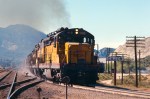
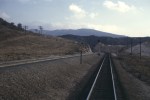
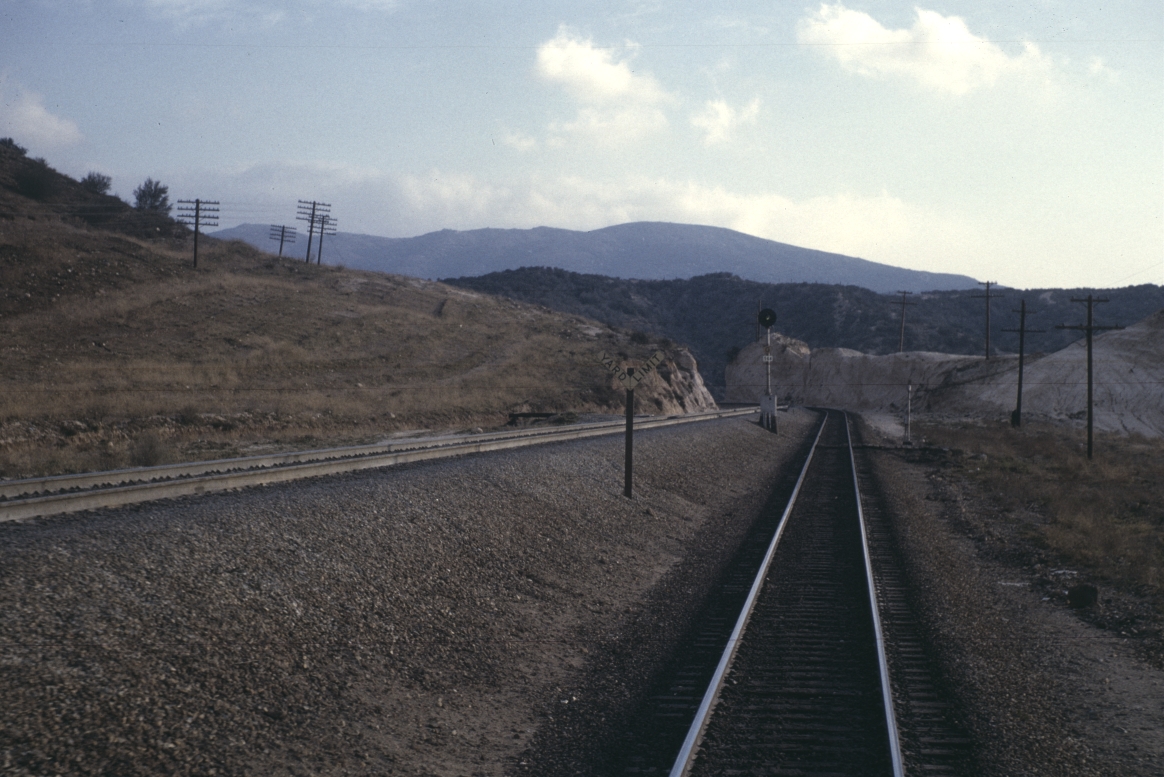
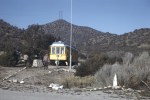
THE EVOLUTION OF THE CAJON PASS SUMMIT AREA

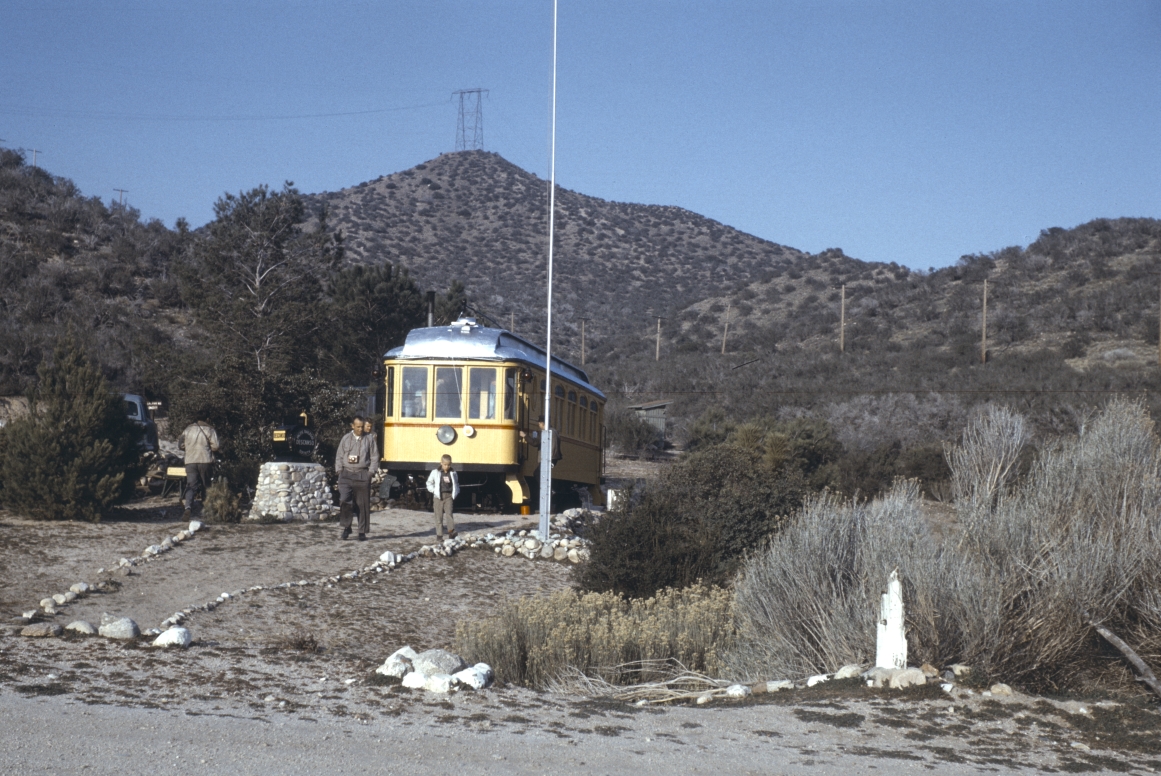
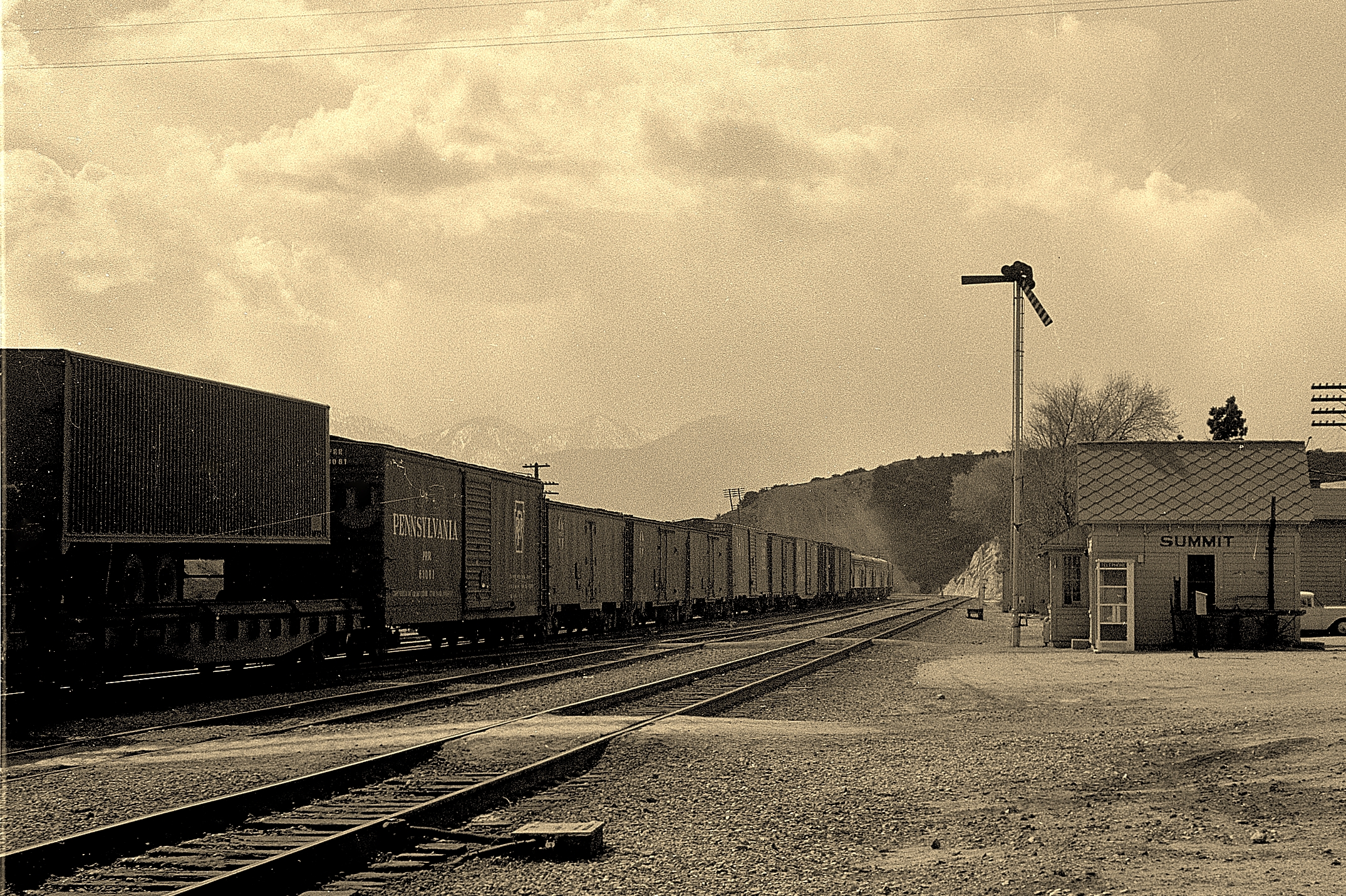
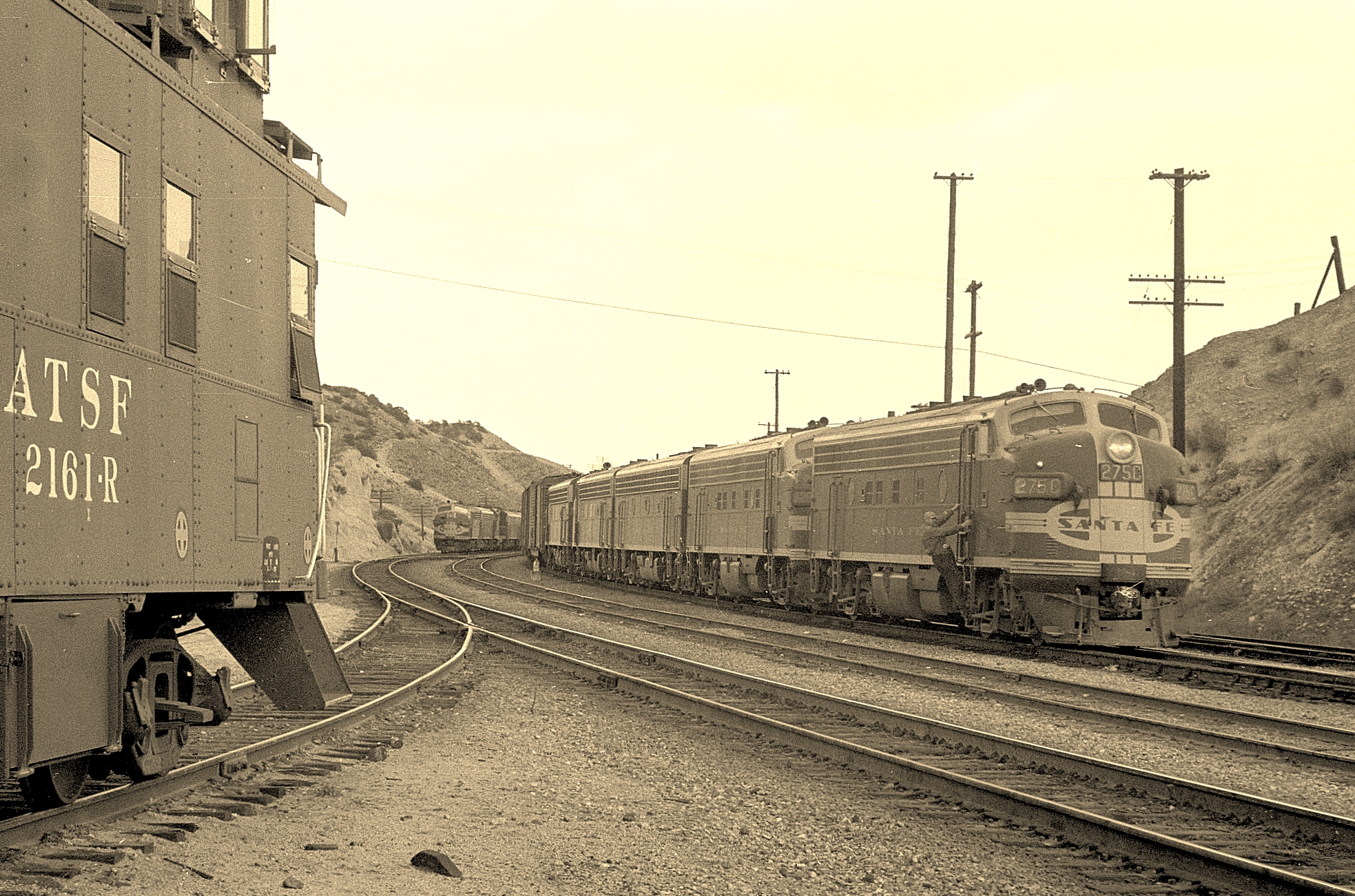
If you are a Southern California railfan, you know of the railroad route that goes from San Bernardino to Victorville via Cajon Pass. To the railfan-photographer it is known as an area of many locales for very dramatic pictures. To the trainmen I know, it is a long, steep section of the railroad that demands the highest level of train handling. Even with today’s powerful locomotives and more effective dynamic braking, gravity remains a dangerous and unfeeling foe of safe and efficient passage of trains over the pass. The deadly history of the pass tells of many disasters. Included in this history is the ongoing efforts by the operating railroads to improve the route to lower operating costs and hazards to the trains. Many changes to the route have occurred since I first went to the Cajon Pass to photograph the railroad operations. I have recently found slides in my untended “collection” which document the changes at Cajon Summit since about 1962 – at least some of them. I will share them with you in phases. This is the phase which illustrates the Summit area as it appeared before the major changes.

Click to enlarge.

Posted in HISTORICAL PICTURES, RAILROAD STRUCTURES, STANDARD GAUGE RAILROADS, THE WAY IT WAS | Tagged | 1 Comment

AN EXAMPLE OF USEFUL LONGEVITY

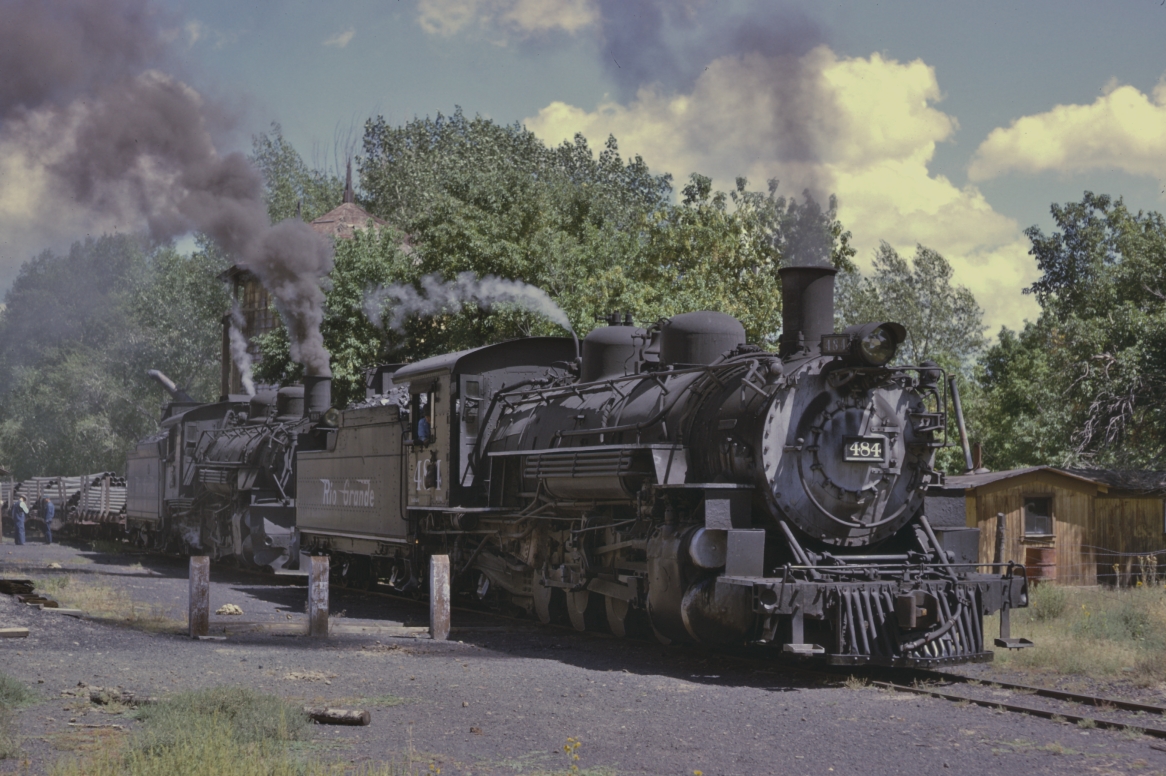
My wife and I recently rode the C&TS R.R. from Chama to Osier and back. Our train’s locomotive was the 484. On more a hope than a hunch, I looked at my 1965 slides of the then D&RGW R.R.. Sure enough, my hope rang true. Part of the time, in 1965, we (“We” is my very understanding wife and three sons.)  were chasing a pipe train destined for Antonio, NM. We hoped we were ahead of the train and went to Gato. Gato turned out to be a water stop. We arrived at Gato as the train pulled in. The locomotives took water with a great show of smoke, steam, whistles. It was a great moment for us. The lead locomotive of the doubleheader was the 484! That was forty seven years ago! As I thought about this, I realized this locomotive will outlive me. I don’t know if I should take comfort from this or not.

Click to enlarge.

Posted in HISTORICAL PICTURES, NARROW GAUGE RAILROADS, RAILROAD HISTORY IN PICTURES, RESTORED RAILROAD EQUIPMENT | Leave a comment

“A PICTURE IS WORTH 10,000 WORDS”

       Click to enlarge

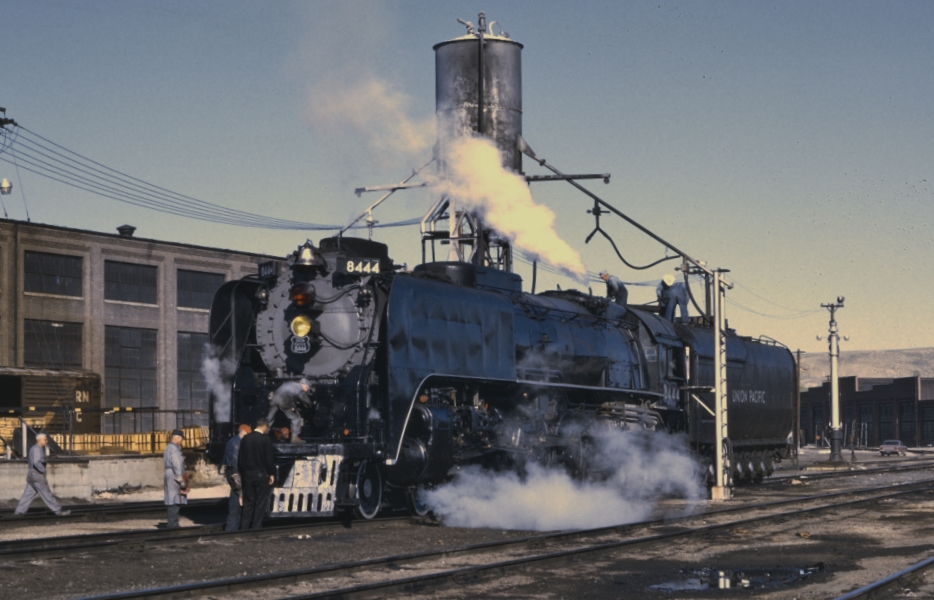
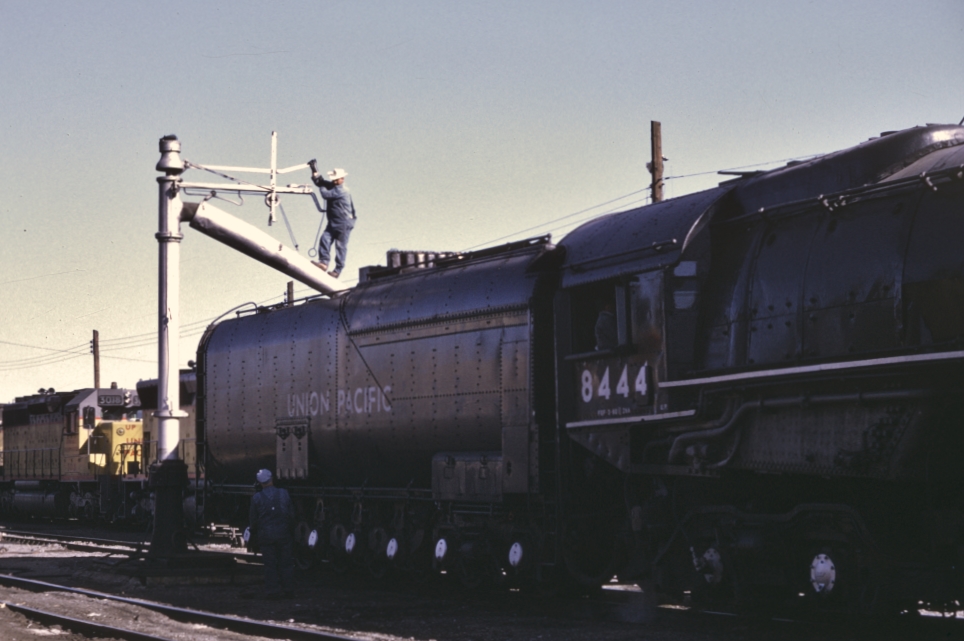
I and a railroad fan friend of mine burned some vacation time in Utah photographing the 1969 Gold Spike 100th. Anniversary celebration. The high-point for me was the daily run of the 8444 between Ogden and Salt Lake City. We spent a lot of time photographing locomotives being serviced at both the Ogden and Salt lake terminals including the 8444. One evening we were wandering around the inside of the Ogden roundhouse looking at the turbine locomotives and the 8444 on house steam when we were approached by a employee wearing bib overalls. He very politely asked who we were and what we were doing in the roundhouse. We told him we were railfans from California there for the Gold Spike party. We talked for a while and he told us he was the roundhouse Foreman and asked if we would like him to show us around. We said yes and the tour was on. He took us over to a GET locomotive and proceeded to explain how it worked. My friend and I were engineers, but trying to absorb what he was saying was like drinking from a fire hose. We ended the tour in the cab of the 8444 talking to the Foreman and listening to the 8444 creak and groan as it cooled down. By the end of the week we had developed an attachment to the 8444 and were not ready to leave, but we both had to be back at work the Monday next. Then we were told the 8444 was going to run light to Evanston in the morning (Saturday) and stop there overnight. The 8444 would continue running light to Green River for service and on to Cheyenne. We left for Evanston Saturday afternoon with the aim of chasing the 8444 to Green river on Sunday morning and then leave for home and work Monday morning. Needless to say, but we were late for work Monday.

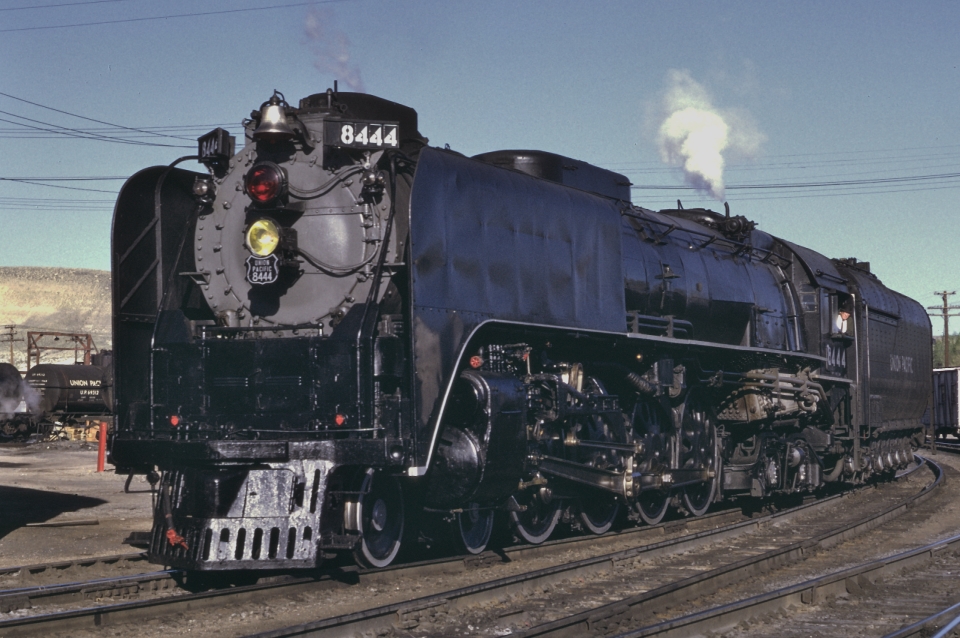
I well remember the doom and gloom rumors concerning the dismal future of the 8444 when it returned to Cheyenne and I believed every word. By Sunday morning, I was convinced I would never see mainline steam locomotive operations again which served to make that morning very special to me. I remember standing on an overpass looking to the West for the telltale smoke and when I saw the smoke in the distance, I started taking pictures knowing full well the locomotive was too far away.These are the circumstances that led me to obtain the photograph of the last, lonely and soon to be vacated Union Pacific steam locomotive. This photograph sums my feelings that Sunday morning perfectly.

We all know the doom and gloom rumor was a fiction and today both the 844 and the 3985 are alive and well. I still like my photograph.

Click to enlarge

Posted in HISTORICAL PICTURES, RAILROAD HISTORY IN PICTURES, RESTORED RAILROAD EQUIPMENT, STANDARD GAUGE RAILROADS, UPRR LOCOMOTIVE 8444, UPRR STEAM PROGRAM PICTURES | Leave a comment

IT WAS A SAD, SAD SIGHT; LITTLE DID I KNOW!

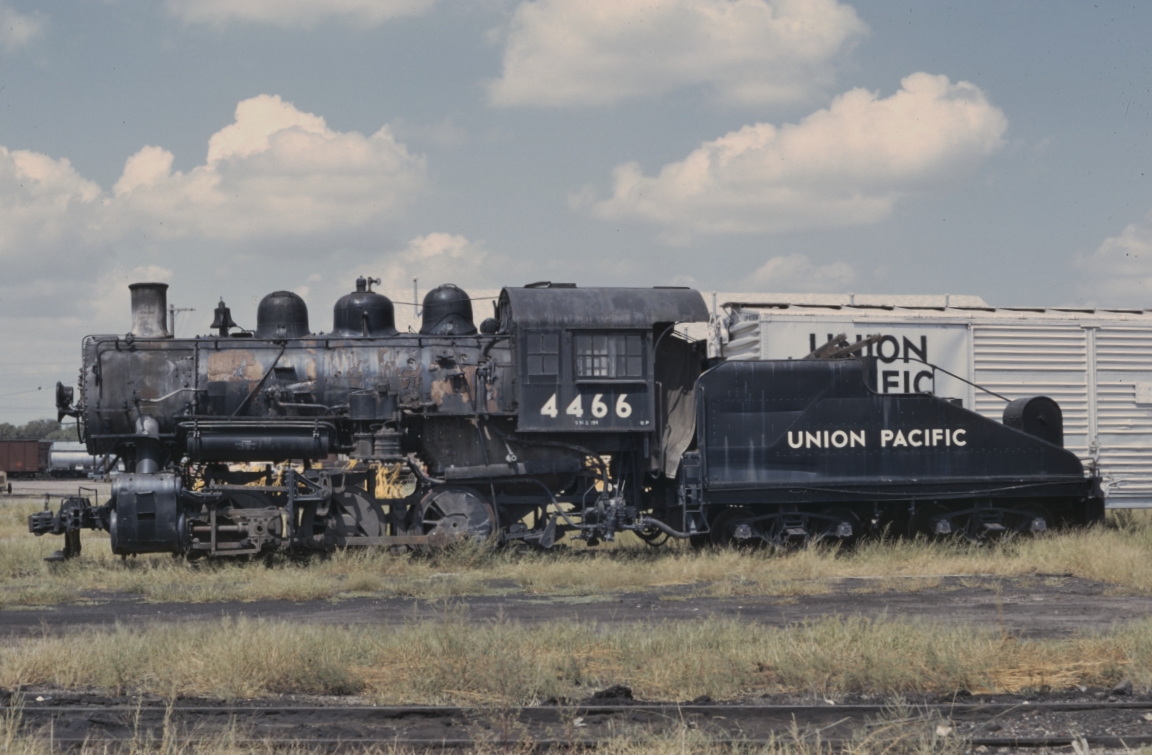
When I photographed the 4466 in 1966, I thought the locomotive was headed to the scrapyard. It was a sad sight to behold sitting there in the weeds and old cinders. Little did I know! I next crossed paths with the 4466 at the California State Railroad Museum as it was the active locomotive on the Museum’s Sacramento Southern Railroad. This happened in 1990 and at that time I did not realize the 4466 was the sad 0-6-0 I photographed in 1966. The connection came more recently as I began the present task of organizing my sixty-years-in-the-making photograph mess – sometimes referred to as my photograph “collection”.

I consulted Jim Ehernberger’s series on Union pacific Railroad steam locomotives and learned:

1.) Lima – built in Oct., 1920

2.) Vacated in 1973 & donated to Museum

“Union Pacific Prototype locomotive Photos”

James L. Ehernberger Collection

Volume 2, page 61

The 4466 at work as the motive power for the Museum’s on site railroad, the Sacramento Southern Railroad, in 1990. It was a welcome sight for me to see a Union Pacific steam locomotive restored and steamed up doing what it was designed to do – useful work!

Posted in HISTORICAL PICTURES, RAILROAD HISTORY IN PICTURES, RESTORED RAILROAD EQUIPMENT, STANDARD GAUGE RAILROADS | Leave a comment

EARLY DAYS AT ORANGE EMPIRE RAILROAD MUSEUM

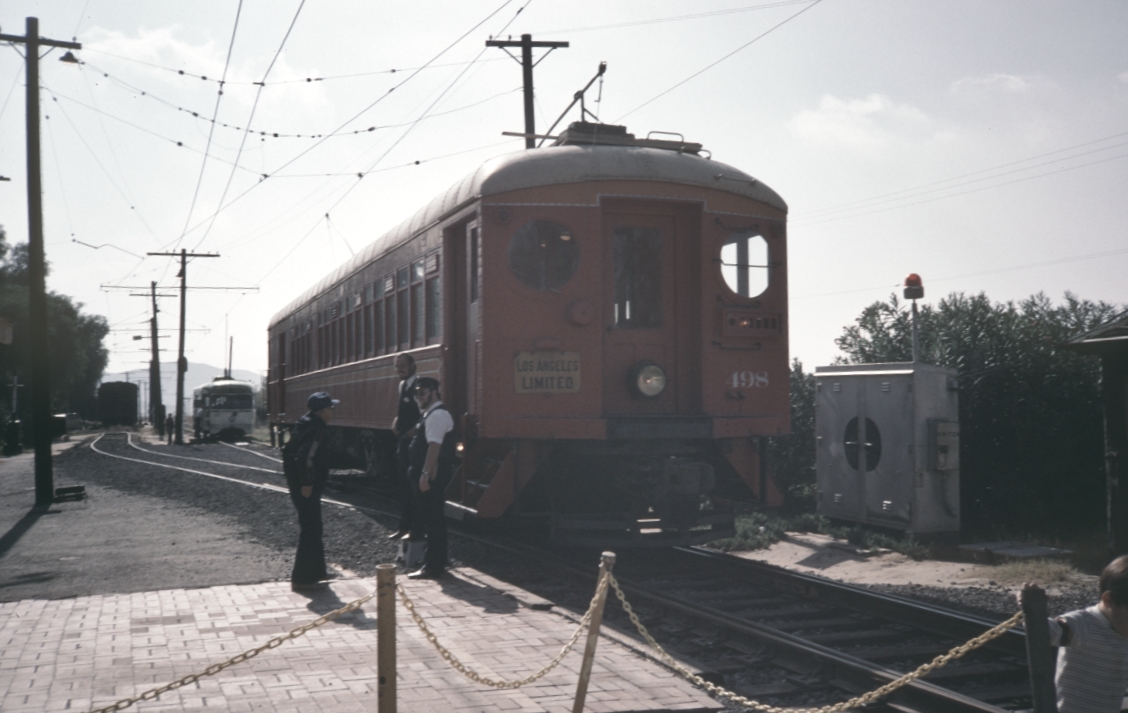
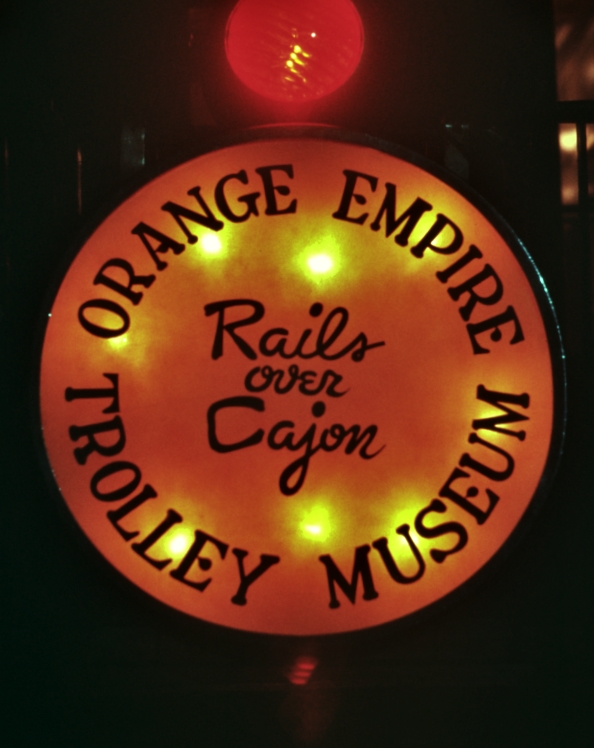
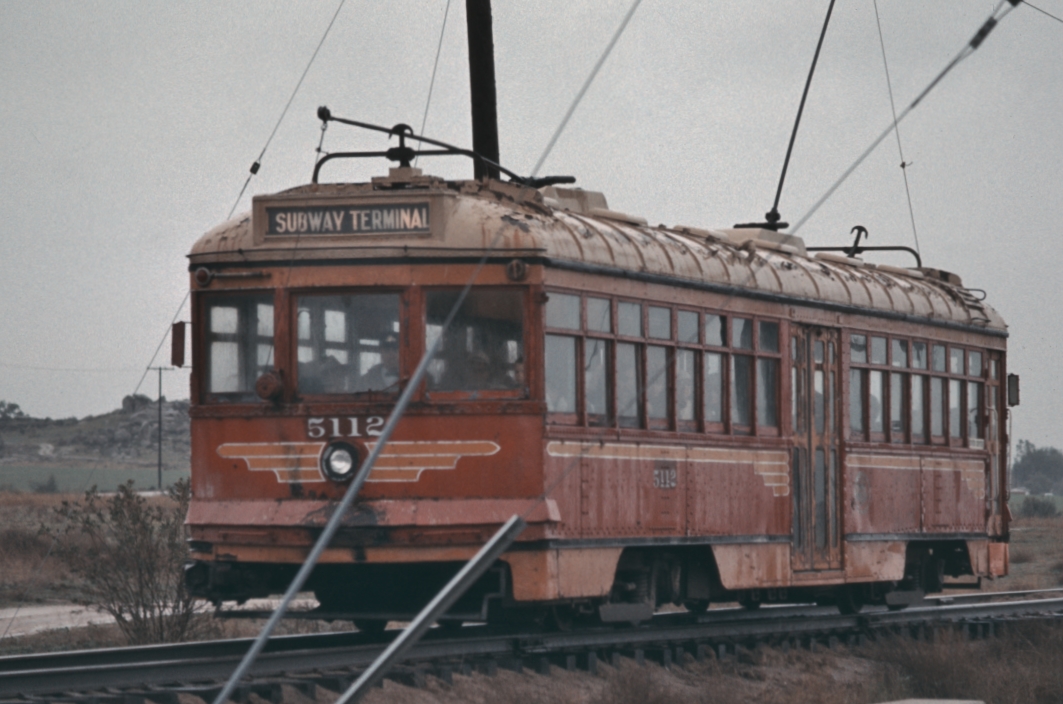
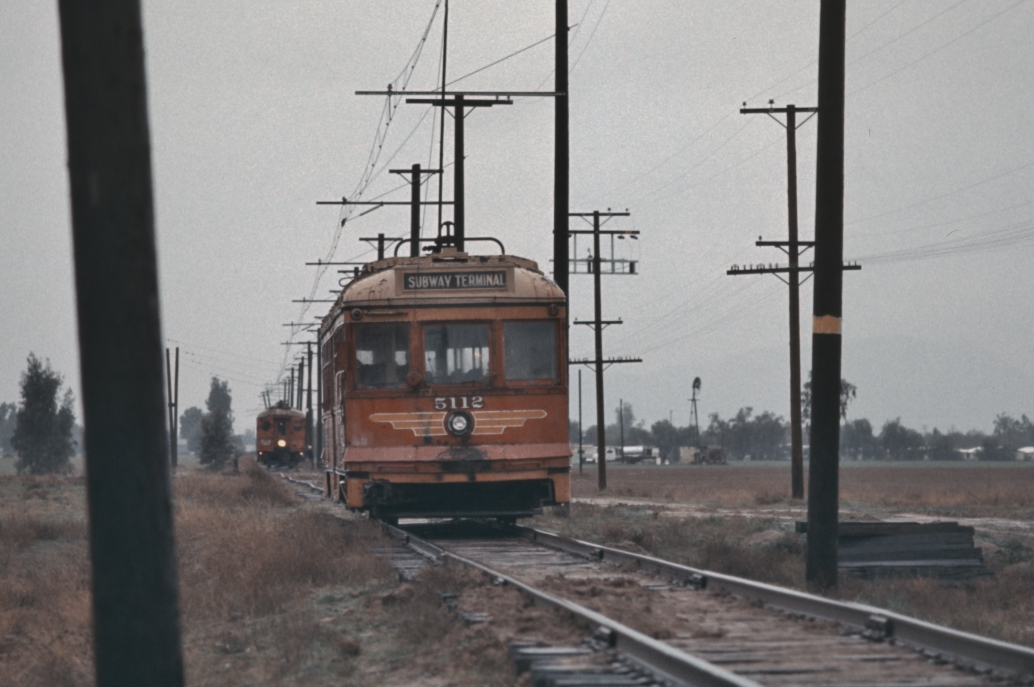
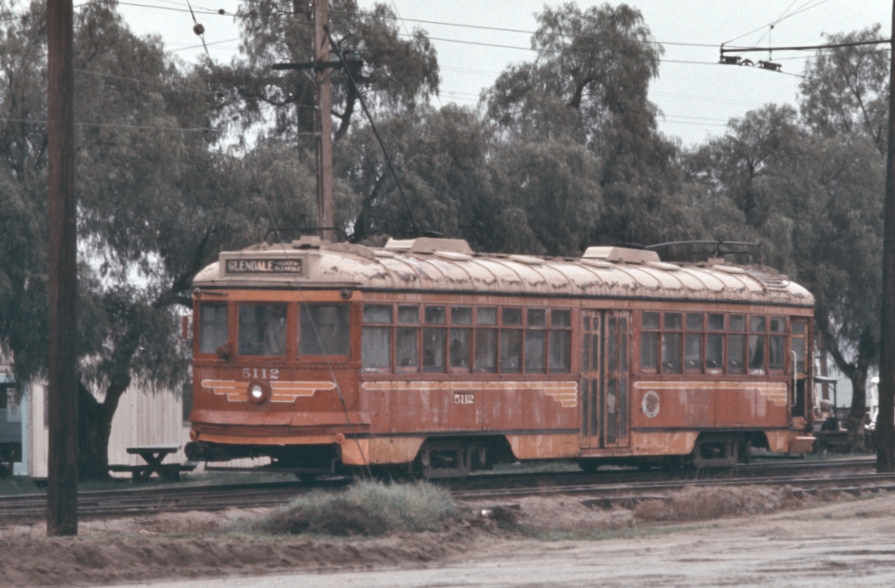
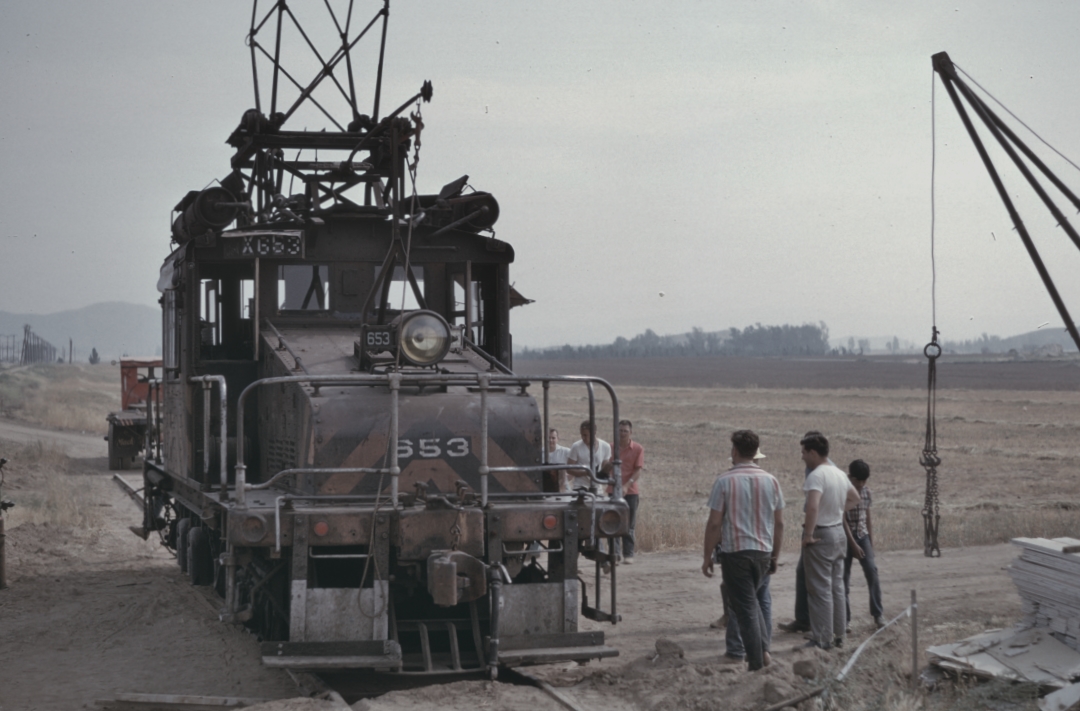
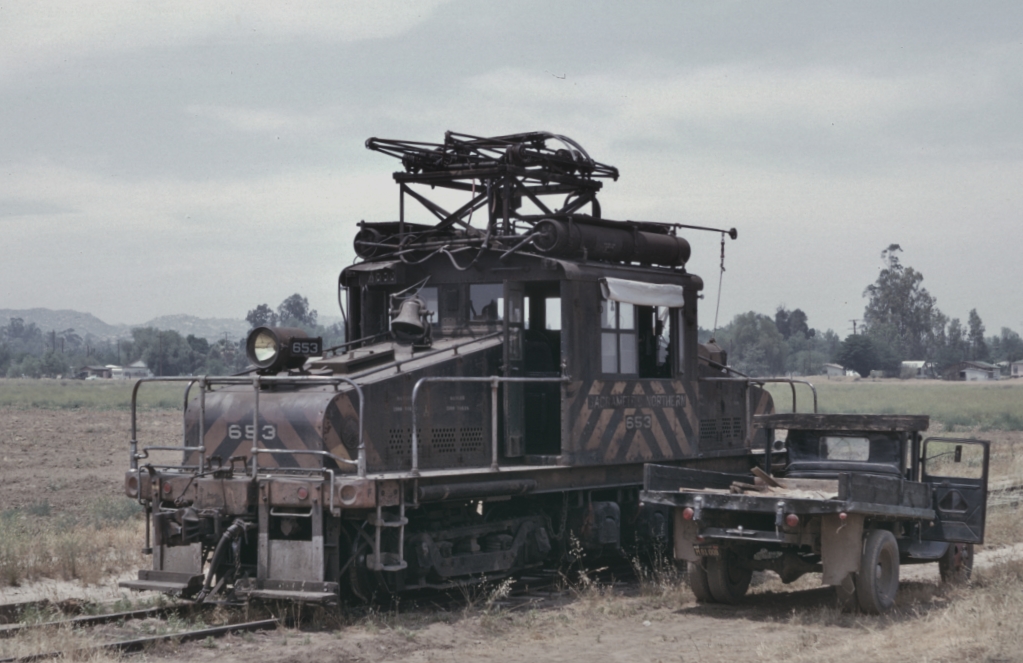
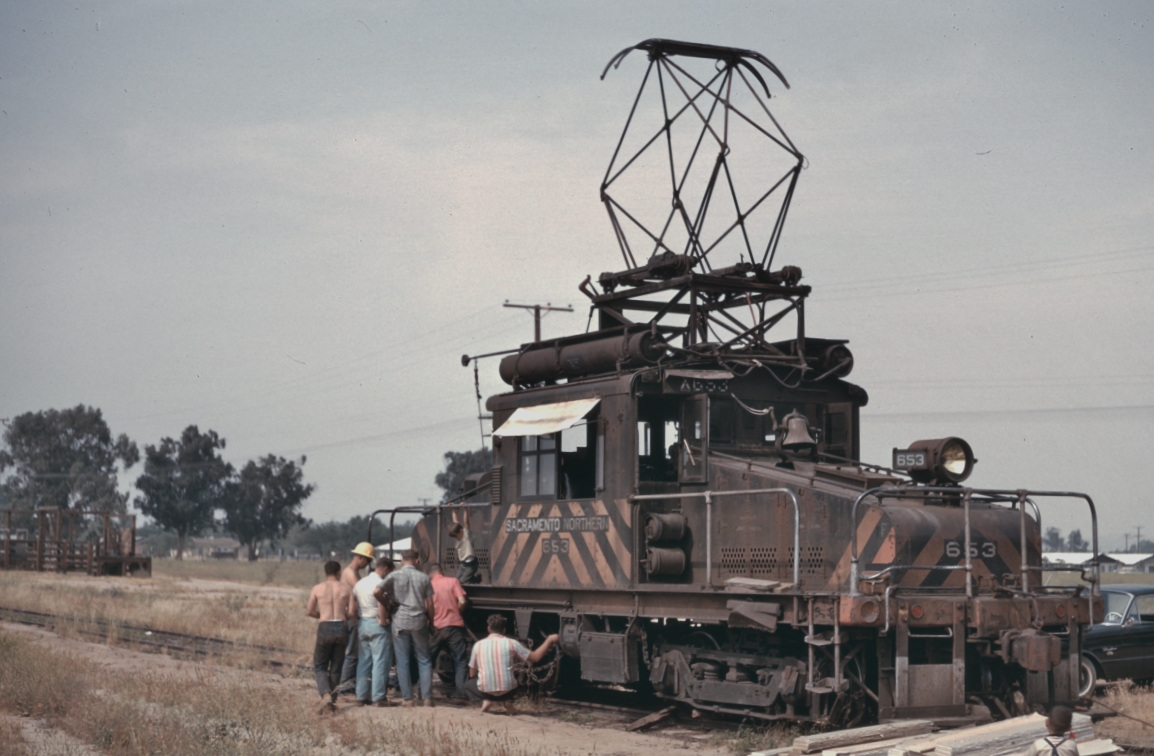
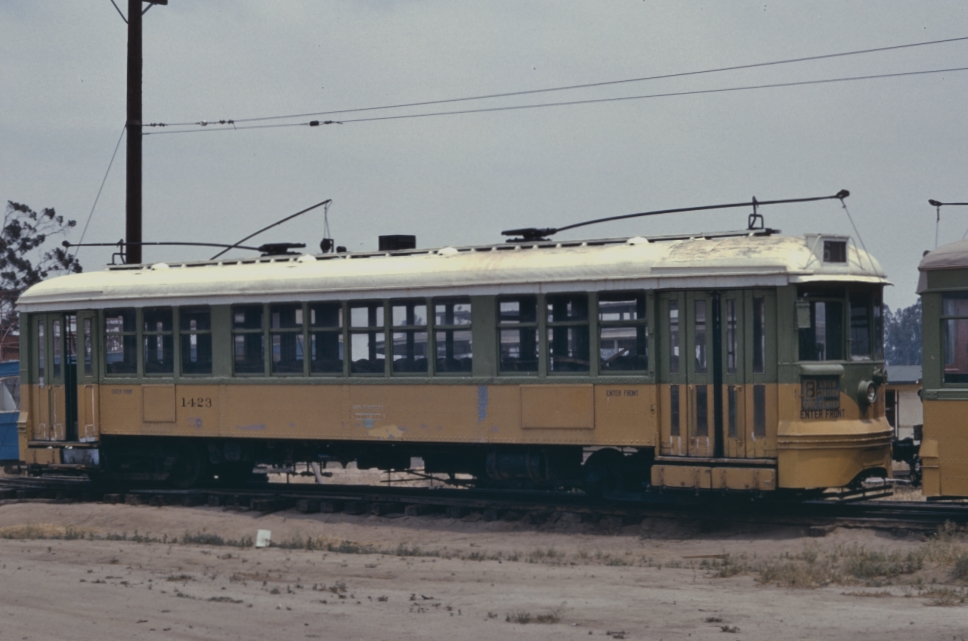
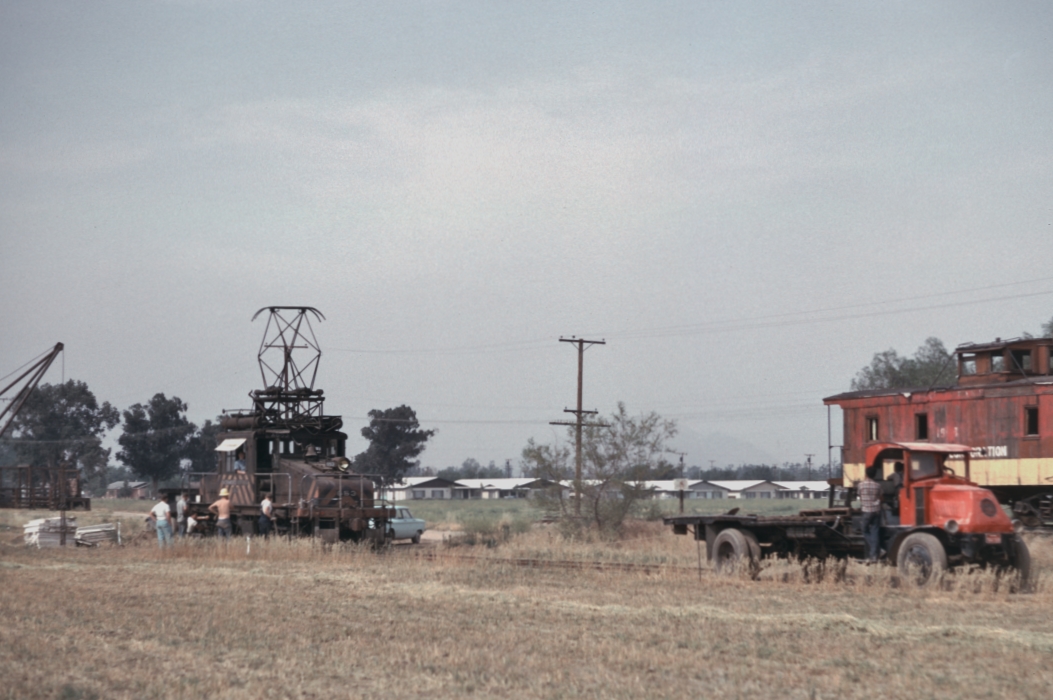
I was not yet a member of the museum during the time these photographs were taken as I was busy with my new career and family. However, I managed to get some time set aside to visit interesting places on weekends by combining my  desire to introduce my sons to the part of the world we inhabit and my own interest in anything concerning railroads. These day-long excursions somehow always seemed to involve transportation modes – ships, ports, airplanes and airports, and, of course, railroads.  What is more appropriate than visiting a trolley car museum. I had no idea at that time I would become a working member of the steam locomotive crew nor that I would ply my machinist trade in the shop as I do today. My sons and I enjoyed our visits then and I enjoy the the time I am now spending at the museum on shop projects. I hope these old slides bring back memories of the early days at the museum and serve as a benchmark for a measure of the remarkable changes that led to the museum we see and photograph today.

Click on any image to enlarge.

Posted in EARLY YEARS AT OERM, HOW THIS & THAT IS DONE, ORANGE EMPIRE RAILROAD MUSEUM PHOTOGRAPHS | Tagged | 1 Comment

THE LAST UPRR PASSENGER TRAIN

The Union Pacific Railroad has a long and proud history of operating premier passenger trains. But alternate modes of public travel became available in the 1920 era and ridership of passenger trains of all U.S. railroads began a slow decline. This decline persisted even as new equipment was introduced in the post WW II period. The railroad companies wanted to eliminate passenger trains in favor of becoming 100% freight haulers. The premier passenger trains in many instances were allowed to decline in service quality and name trains were combined. It was no different for the U.P.; Service quality was maintained but the “City Of Los Angeles” became the “City Of Everywhere”. It was decided the railroads would exit the passenger train business and a new entity, “Amtrak”, would assume the passenger train business. A date in 1971 was designated for the transfer of the passenger train business. This, of course, created a “last day” and a “last train” scenario in which I could not resist the urge to go down to the tracks and get the “photograph”. I was faced with the choice of a close-up shot or a distance shot. I choose a distance shot so as to include the entire train. That is how I found myself standing in a field near the City of Commerce waiting for the last passenger train on the Union Pacific Railroad, so I am told. I have no proof of this, but I believe it anyway. The flags on the 904 are enough for me. A headlight – and then it was over in an instant. I went home.

Years pass. The old slides are re-discovered in my current work of digitizing my photo collection and I am offering the opportunity for others to share that wistful moment with me.

Posted in DIESEL LOCOMOTIVES, HISTORICAL PICTURES, RAILROAD HISTORY IN PICTURES | Leave a comment

LAYING CONCRETE TIES AT CAJON PASS SUMMIT

My wife and I went for a “Sunday drive” to see the sights and we ended up at  the overlook at Cajon Pass Summit in the early morning, whereupon we were surprised to see this strange contraption sitting on the mainline. We realized quickly it was a tie laying train getting ready to proceed downgrade. We were very surprised when the train started moving as it was moving at a fast paced walking speed, judging from the personnel inspecting the train as it started laying ties. We watched in amazement and figured out how it worked. Perhaps you will share our amazement after watching the slide show video.

Posted in HISTORICAL PICTURES, LAYING NEW CONCRETE TIES, STANDARD GAUGE RAILROADS | Leave a comment

SANTA FE BIG HOOK IN ACTION

THIS DOES NOT LOOK GOOD AT ALL!

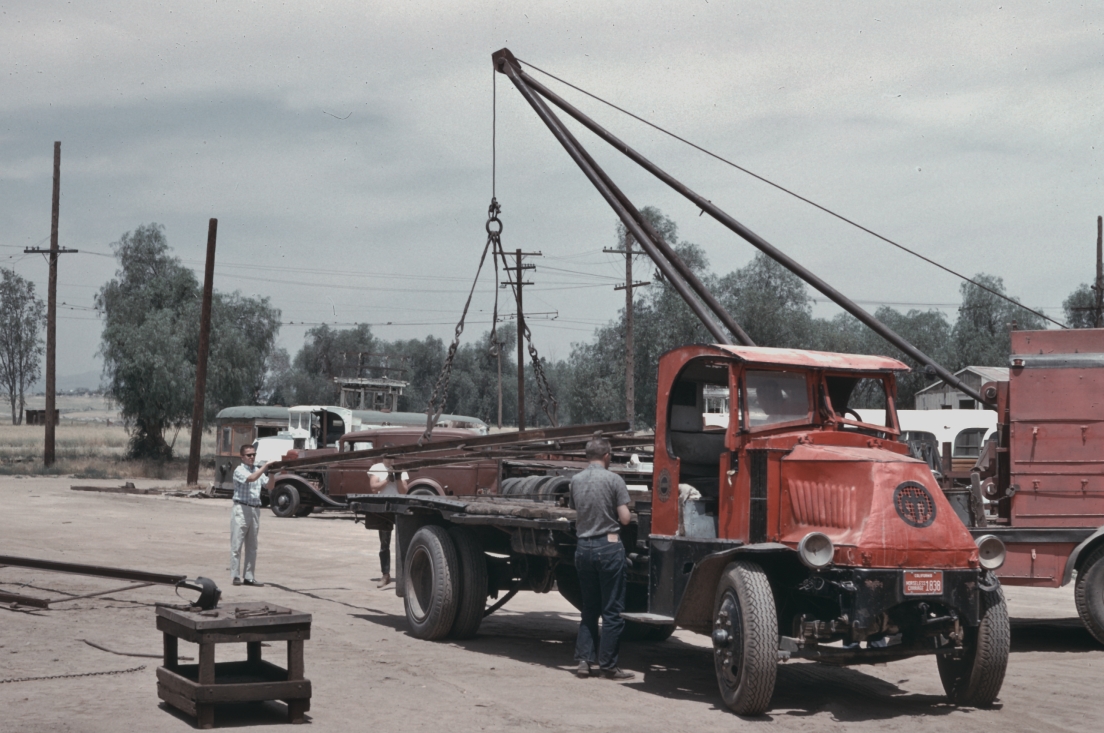
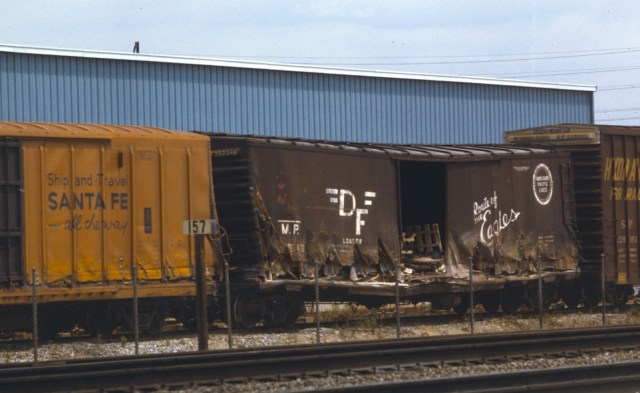
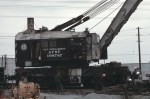
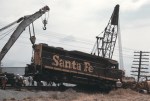
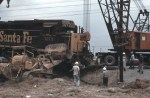
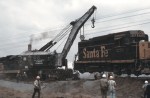
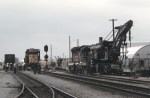
This apparent sideswipe resulted in the lead locomotive of an Eastbound freight leaving the the rails and ending in the ditch. This accident happened in mid-1971 on the AT&SF mainline portion located near Carmenita, Cal.  I do not recall the circumstance which led to my opportunity to photograph the incident, but it was most likely my observation of these damaged cars. I ask a friend recently to look-up M.P. 157 and he reported it is within the city of La Mirada. This makes sense to me as La Mirada is but a short distance East of Carmenita. I am sure of Carmenita because I recognize the oil tanks and the refinery tower visible in one of the photographs. I am a dyed-in-the-wool Union Pacific RR brand of foamer and I do not possess much AT&SF reference material. So, I am not sure, but strongly suspect the use of a steam powered derrick to clean-up this mess in 1971 was the last time, or nearly the last time, it was used thus on the AT&SF.

Posted in DIESEL LOCOMOTIVES | 1 Comment

A SECTION OF OLD TRACK – SO WHAT?

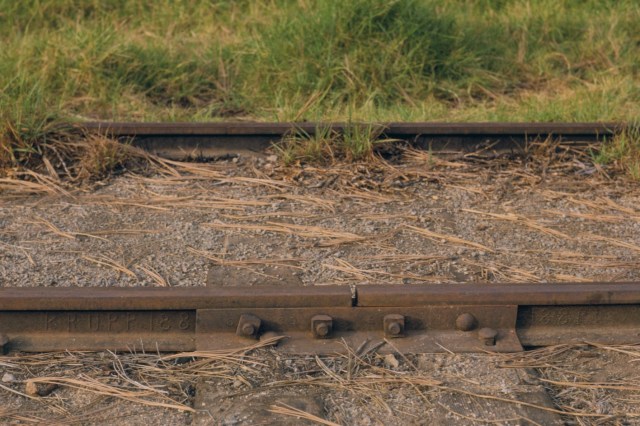
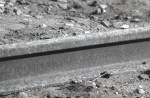
THIS SHORT SECTION OF TRACK IS A PART OF THE SIDING TRACK LOCATED IN FRONT OF THE SANTA FE DEPOT AT FALLBROOK STATION.
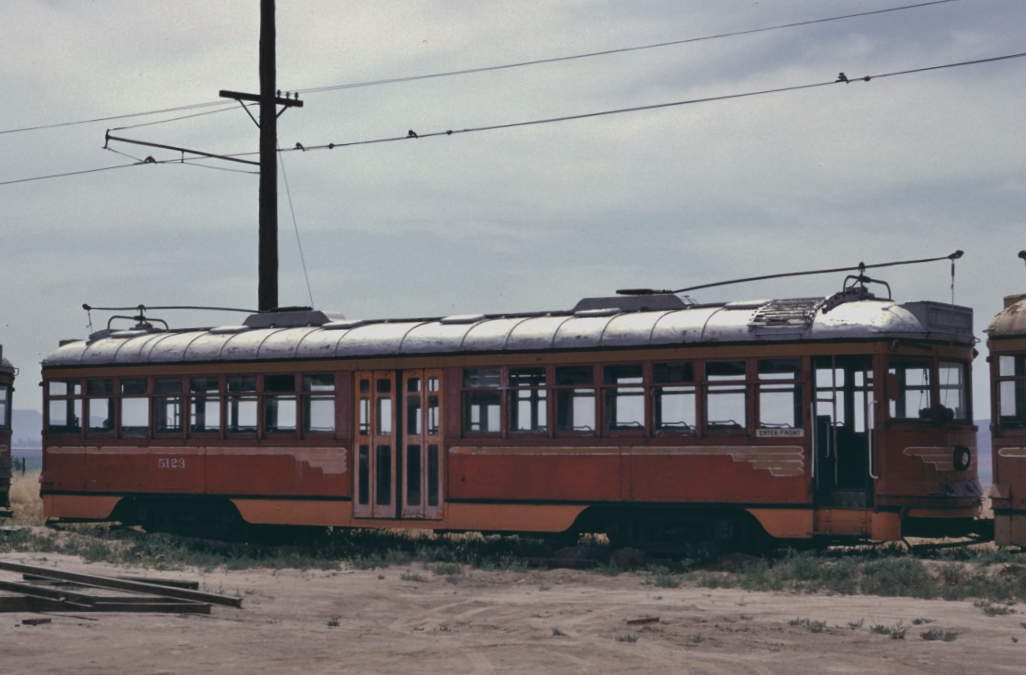
It was my good fortune to be a participant of a 1965  railfan excursion trip up the AT&SF Fallbrook branch line. Today the line is long gone and all that remains are our photographs. The Fallbrook branch was originally a segment of the California Southern Railroad route from the Pacific coast to Perris and beyond. This route was completed about 1885. The route was built close to the riverbed to avoid excessive and costly gradients, as was the custom then. What the builders did not know was the  river’s history of periodic large floods. Within a few years, after several wash-out and re-build cycles, the wash-out prone segment in the middle was abandoned, leaving the two end stubs as the Fallbrook and Hemet branches. The Fallbrook branch has been abandoned, but the Hemet branch still sees BNSF traffic, including the occasional passenger train operated by the ORANGE EMPIRE RAILROAD MUSEUM, located at PERRIS, CALIFORNIA.

Our excursion train traveled to the end of the branch at Fallbrook and there we left the train to explore the depot area. It was then I obtained the photograph above. This photograph was taken to document an interesting discovery I made upon examination of the rails of the track. To most people, including most railfans, rail is just rail; seen one rail and you have seen enough for a while. Not so for me, however. To see why, look at the rail in the lower left corner. What you see is the name of the company that manufactured the rail and the year it did so. I call these the marks of history and I look for them wherever I travel. I photograph the more interesting ones . This one is very much that – interesting.

A brief look around indicated this particular manufacturer – Krupp – was well represented at this site. With the name Krupp, the 1881 date, and a little prior knowledge, I concluded the line was laid with “Made in Germany” rail and was the original rail by reason of the date on the rail. Well! It is interesting to me! I could go on and tell you why these “facts” and the  questions that follow are of interest to me, but my aim is not so much a history lesson as it is to sensitize you to the historical significance of small details, such as rail rolling marks. Go look for yourself. Don’t be concerned about the strange looks you get when searching  for unusual markings; I never am due to my being a “foamer” of long standing.

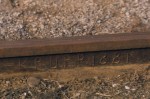
Click on any photograph below to see examples of different rolling marks.

Posted in DIESEL LOCOMOTIVES, RAILROAD HISTORY IN PICTURES | 3 Comments

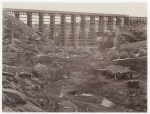
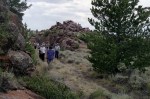
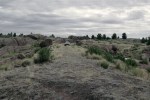
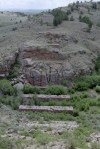
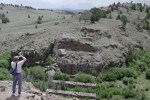
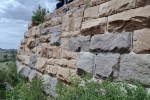
THE WYOMING SITE OF THE UNION PACIFIC’S INFAMOUS DALE CREEK BRIDGE

THESE PHOTOGRAPHS WERE TAKEN DURING A UNION PACIFIC RAILROAD HISTORICAL SOCIETY  ANNUAL CONVENTION HELD IN CHEYENNE, WYOMING. MY THANKS TO JIM EHRENBERGER FOR MAKING THIS RARE VISIT TO THE BRIDGE SITE POSSIBLE.

THESE PHOTOGRAPHS  ARE BY THE OLD MACHINIST.

Posted in DIESEL LOCOMOTIVES | 9 Comments